



Is your website a digital maze or a streamlined highway? In the age of instant gratification, clunky interfaces are a death sentence. With 75% of users judging a website’s credibility based on its design, you can’t afford to gamble.
User Experience & User Interface Design Dallas-Fort Worth
In today’s fast-paced world, people expect a lot from the websites they visit. They want information to be readily available, they want the experience to be enjoyable, and they want to feel confident that their time is being well-spent. A business’s online presence is a virtual journey that can make or break a brand. A website that is both visually appealing and easy to navigate can leave a lasting impression on visitors and encourage them to explore further. Conversely, a website that is cluttered, confusing, or slow to load can quickly drive visitors away. The design of a website is therefore a critical investment that can pay dividends in terms of customer satisfaction, brand loyalty, and business success.
UX/UI FAQ
What is the difference between UX and UI Design?
Although they're often lumped together, UX and UI design are actually two separate, yet deeply connected, fields.
User Experience (UX) design is all about how something works and how people feel when they interact with it. It focuses on usability, efficiency, and how well the product meets user needs. A UX designer's job involves user research, mapping out user journeys, building wireframes and prototypes, and running tests to make sure the experience is smooth and logical from start to finish.
On the other hand, User Interface (UI) design is centered around how the product looks and feels on the surface. UI designers take care of the visual side — choosing colors, fonts, button styles, icons, layouts, and other elements that shape the aesthetic and interactive feel. Their goal is to create a clean, consistent, and engaging visual experience.
To visualize the difference: UX is like the blueprint and structure of a home, ensuring it's livable and practical. UI is the decor and style that makes it inviting and beautiful. Both roles are essential for building a product that's not only functional but also delightful to use.
How will UX/UI design benefit my business?
UX/UI design can make a huge difference to your business.
At its core, good UX is about making your product easy and enjoyable to use, while UI ensures it looks polished and professional. When both are done well, they have a measurable impact. For starters, people are more likely to stick around if your site or app is intuitive. If it's confusing or clunky, they'll bounce, probably straight to a competitor. But when users can find what they need, understand what to do, and actually enjoy the process, they're far more likely to convert — whether that means making a purchase, signing up, or reaching out. Great design also builds trust. Think about it: your interface is often the first impression someone has of your brand. Clean visuals, consistent layout, thoughtful details — they all signal that you're professional and reliable. And here's another bonus: you'll reduce support headaches. A well-designed product answers questions before users even have to ask. That means fewer customer service tickets and happier customers overall. Lastly, UX design involves a lot of user research and testing so you're not just guessing what your customers want. You're making informed decisions based on real behavior and feedback. That kind of insight is gold.
So in a nutshell: UX/UI isn't just about aesthetics: it's about creating a smoother experience for your users and a stronger business for you.
What is your UX/UI design process?
Our UX/UI design process is user-centered, collaborative, and focused on delivering real business value. Every project is unique and the workflow can change based on the requirements and scale, but generally, here's our typical approach:
- Discovery & Research — We start by getting to know your business, goals, and target audience. This often includes stakeholder interviews, competitor analysis, and user research. The goal is to understand both your needs and your users' pain points, so we're solving the right problems from the start.
- Strategy & Planning — From our research, we define the core user journeys, prioritize features, and map out the structure of the experience. This is where we align business goals with user expectations and start planning how the product should function.
- Wireframes & User Flows — Next, we create wireframes and user flow diagrams to visualize the layout and navigation. These are rough sketches of how the content and features will be organized, without getting into visuals yet. It's all about function first.
- Visual Design — Once the UX is mapped out and approved, we move into the UI design phase. This is where we bring everything to life visually — designing the interface with your brand in mind, including colors, typography, icons, and interactive elements. Our goal is to make it beautiful, consistent, and intuitive.
- Prototyping & Testing — We create interactive prototypes that simulate the real user experience. These are tested to gather feedback and catch any usability issues early. It's an iterative process; we refine as needed based on what we learn.
- Handoff & Support — Once the design is finalized, we prepare detailed design specs and assets to hand off to your team. We also provide support post-launch to ensure the project continues to run smoothly when any refinements, updates, or new features are implemented.
In short, we design with purpose. Every step is focused on creating a product that's not only visually appealing, but genuinely easy and enjoyable to use — because that's what drives results. Get in touch with us if you'd like to see a sample project or a walk-through of one we've done!
People ignore design that ignores people.

In the blink of an eye, a visitor forms an opinion of your digital domain. Studies reveal that users make a subconscious judgment about a website within 50 milliseconds (0.05 seconds) of landing on a page1.
The Power of First Impressions
The digital realm operates on the principle of immediate evaluation. Within the first moments of arrival, a user’s perception crystallizes, dictating their subsequent interaction. Research indicates that visual appeal and perceived usability are assessed within a fraction of a second, influencing overall satisfaction. A cluttered or confusing digital space triggers cognitive overload, leading to frustration and abandonment. Furthermore, studies by Nielsen Norman Group emphasize that users often scan rather than read, highlighting the importance of clear visual hierarchy and intuitive navigation(2). Therefore, crafting an intuitive and aesthetically pleasing digital environment isn’t merely about aesthetics; it’s about leveraging cognitive biases to build instant credibility and foster engagement. A polished digital presentation builds trust and encourages exploration, transforming fleeting glances into lasting connections.

57%
of internet users say they won't recommend a business with a poorly designed website on mobile
47%
of users expect a maximum of 2 seconds loading time for an average website
2.6
seconds is all it takes for a user's eyes to land on the area of a website that most influences their first impression

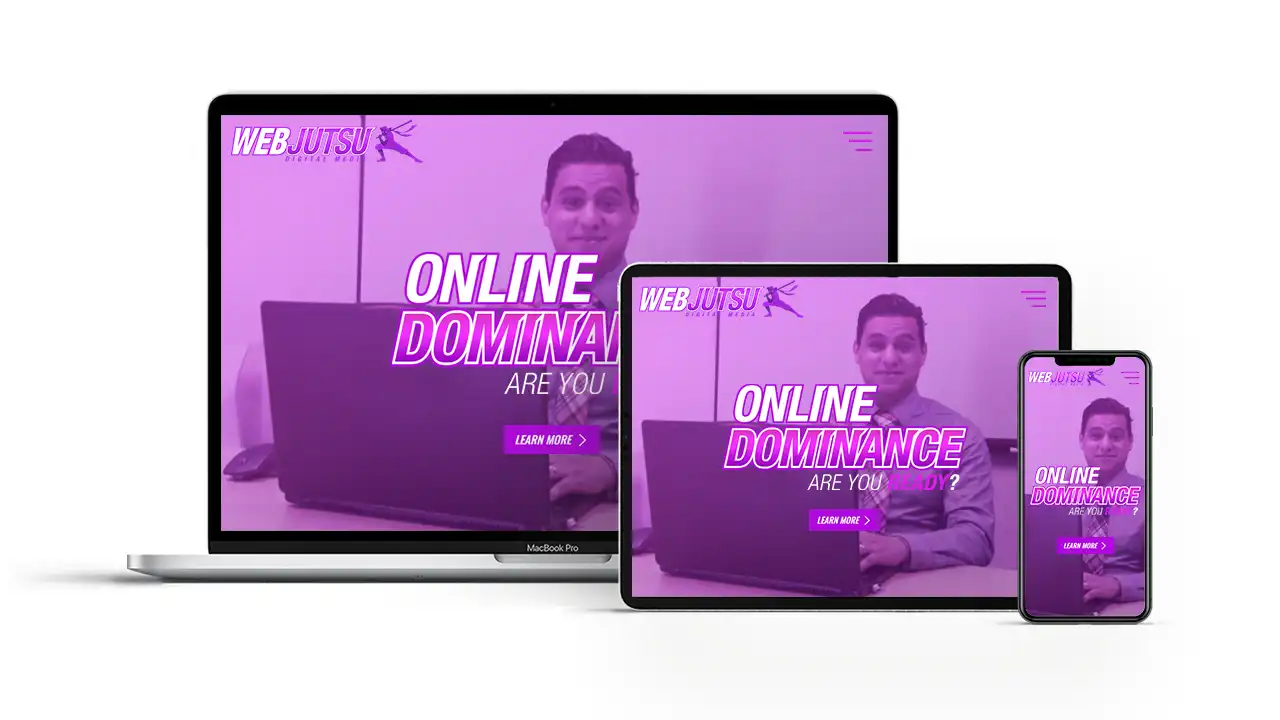
Gone are the days of desktop-centric experiences; modern users seamlessly switch between smartphones, tablets, and laptops, expecting a consistent and intuitive interaction.
The Importance of Responsive Design
In a world where digital access is as varied as the devices we use, the ability of a digital space to adapt is paramount. This necessitates a digital architecture that bends, flexes, and reconfigures itself to accommodate diverse screen dimensions. The imperative for responsive design is further amplified by the dominance of mobile browsing. Moreover, Google’s shift to mobile-first indexing underscores this reality, prioritizing the mobile version of a website for search ranking2. This necessitates fluid layouts that dynamically adjust to screen size, ensuring readability and ease of navigation regardless of the device. Recent industry reports indicate that mobile commerce continues to see strong growth, so those websites that are unable to adjust to the mobile platform will miss out on key sales, and exposure. By crafting digital spaces that are truly responsive, businesses can meet the demands of an increasingly mobile-driven world, enhancing accessibility and boosting engagement.
62.5%
of all website traffic is from mobile devices as of 2024
84%
of visitors prefer mobile websites over desktop-centric one
39%
of users will bounce due to slow load times

User testing transforms abstract design concepts into tangible realities, revealing the subtle nuances of user behavior.
The Role of User Testing In Website Design
In the ever-evolving digital ecosystem, relying solely on intuition is a perilous strategy. To truly understand how individuals interact with a digital environment, direct observation is indispensable. User testing serves as a vital bridge, revealing the nuanced ways individuals interact with a site. Tools like heatmaps and session recordings, readily available on platforms like Hotjar, provide invaluable insights into user navigation and interaction patterns. Recent case studies highlight how A/B testing, a form of user testing, can drastically improve key performance indicators by validating design choices with real user data. By prioritizing user feedback, designers can create digital spaces that are not only visually appealing but also intuitively navigable. This data-driven approach fosters a user-centric design philosophy, ensuring that a website resonates with its target audience and achieves its intended objectives.
Webjutsu’s team of UX/UI ninjas transforms digital frustration into seamless interaction. We leverage design thinking and agile methodologies to build experiences that resonate. Forget ‘bounce rate’—let’s talk ‘raving fans’.

- Lindgaard, G., Fernandes, G., Dudek, C., & Brown, J. (2006). Attention web designers: You have 50 milliseconds to make a good first impression! Behaviour & Information Technology, 25(2), 115–126. https://doi.org
- “Mobile-first indexing has landed – thanks for all your support” Google, 2023. https://developers.google.com/blog/2023/mobile-first-is-here
- “Generation Influence: results from the 2020 Gen Z report.” WP Engine, 2020. https://wpengine.com/gen-z-us/
- “104 Crucial Web Design Statistics for 2024” SAG IPL, 2024. https://blog.sagipl.com/web-design-statistics/