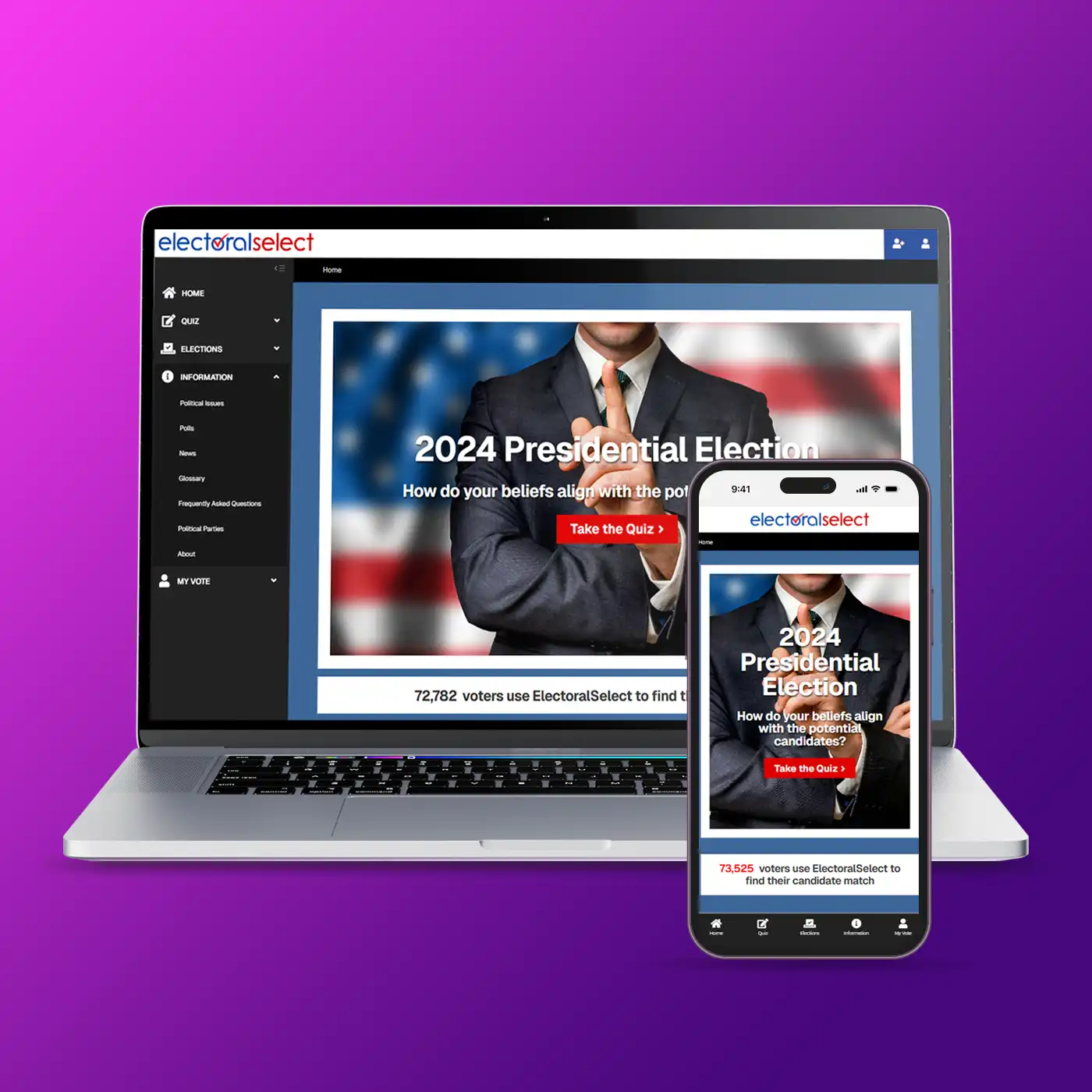
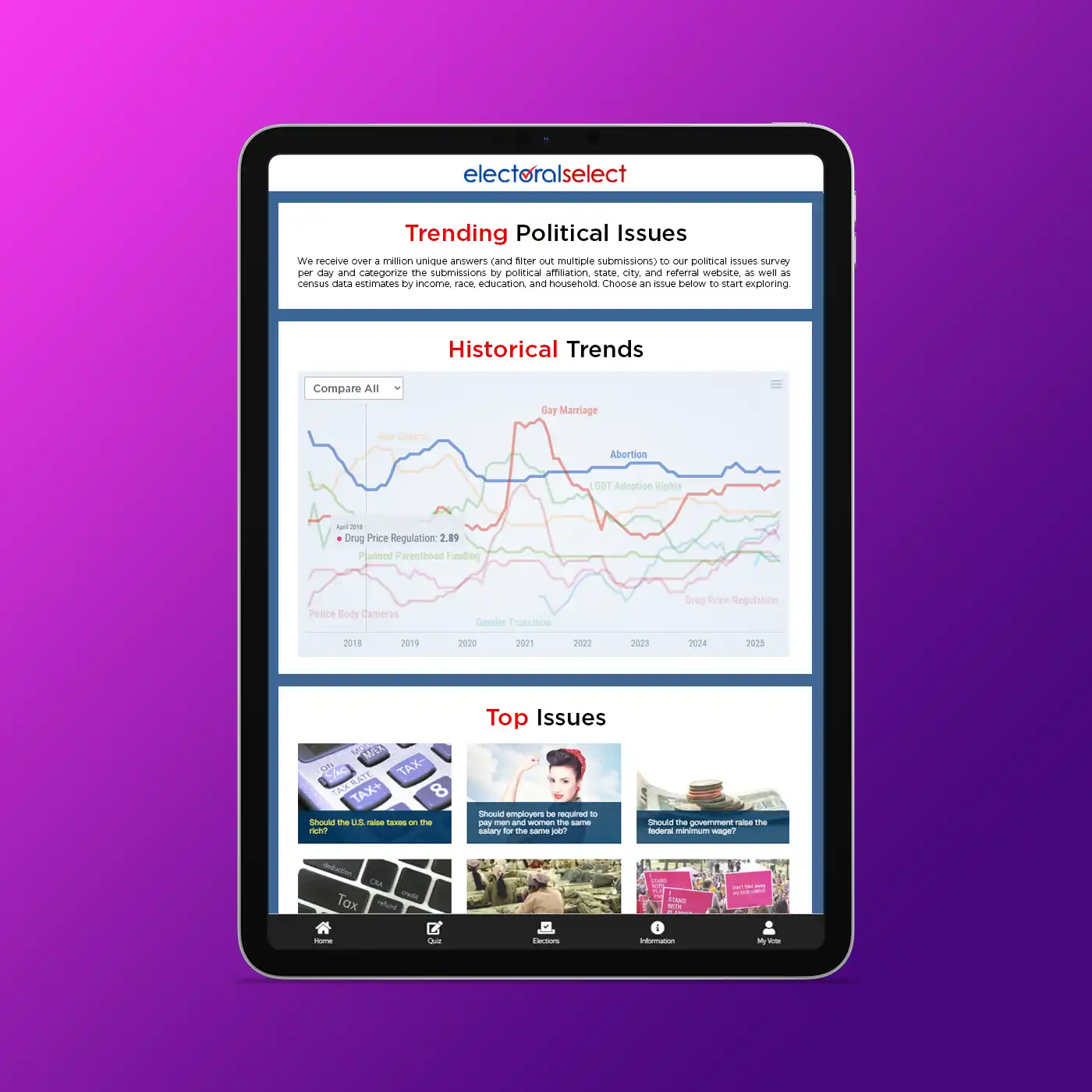
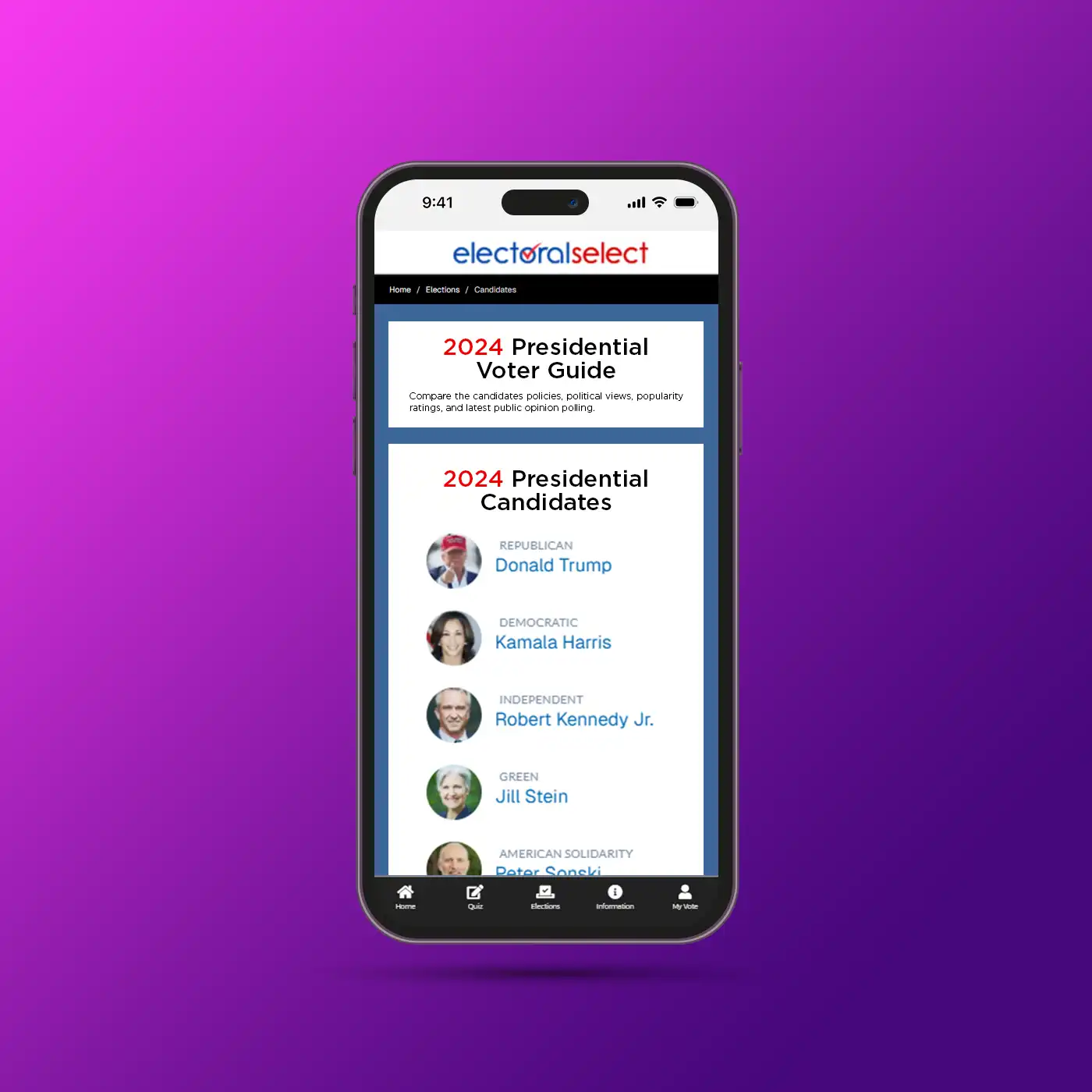
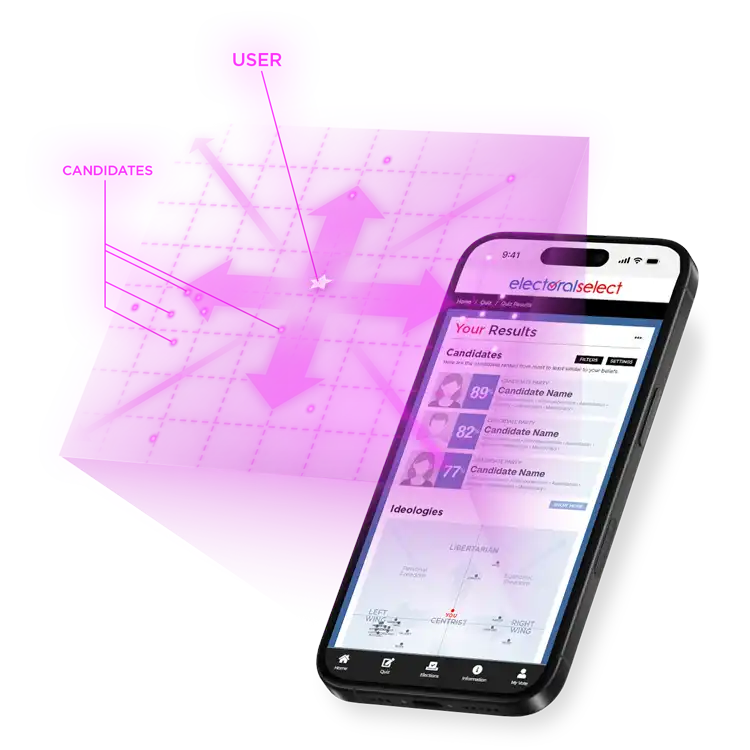
FCU’s Department of Political Science and Public Administration teamed up with Webjutsu to develop a web app helping users find political candidates aligned with their values via a quiz.

A Web App Matching Voters To Candidates
- Developed and implemented a complex algorithm to parse user values and return best-fit solutions of political candidates
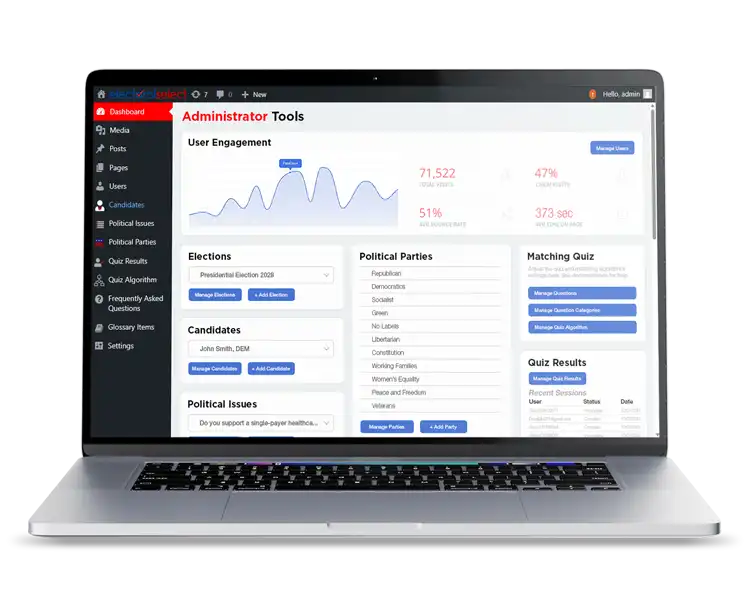
- Created a user-friendly backend setup to allow faculty/students to update the content
- 93% of users rated the experience as helpful or very helpful in focus group tests
Webjutsu was an outstanding partner in bringing Electoral Select to life. They understood our academic goals and transformed them into a user-friendly, unbiased tool that helps people better understand political alignment. The weighting system they developed was both intuitive and powerful, allowing users to prioritize issues that matter most to them. Their team was responsive, thoughtful, and deeply collaborative throughout the process. The final product not only met but exceeded our expectations, and it’s already making a meaningful impact in our classrooms and beyond. I’d highly recommend Webjutsu to any academic or organization looking to build an engaging, mission-driven digital experience.

The Department of Political Science at Florida Coastal University set out to build a nonpartisan, educational web app that helps users identify which political candidate best aligns with their personal values. The tool needed to simplify complex issues into engaging quiz questions, deliver personalized results, and allow users to weigh how important each issue is to them. Key challenges included maintaining ideological neutrality, developing a flexible matching algorithm, adapting to evolving candidate platforms, and creating an experience that was both informative and easy to use.
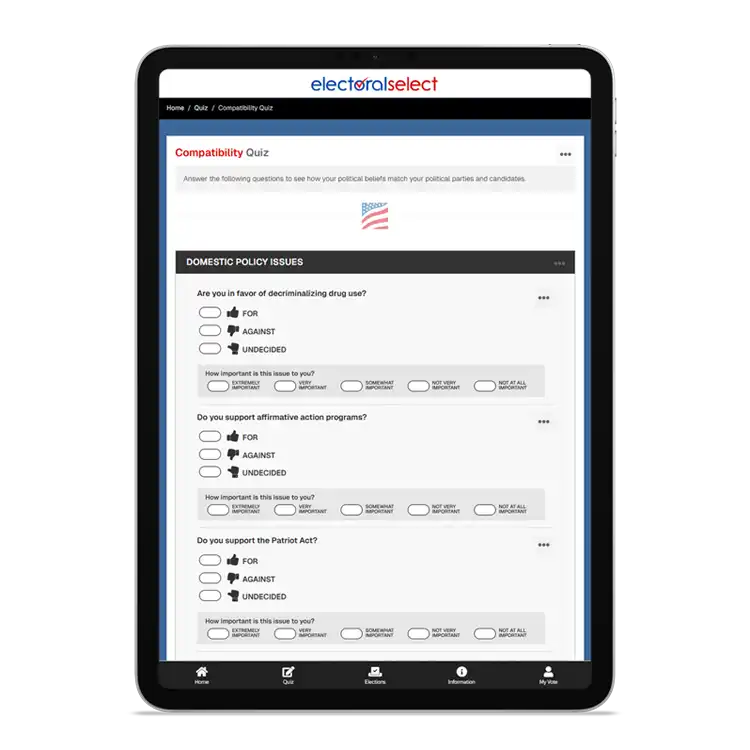
Webjutsu’s UI team worked with researchers and users to design an interface that was neutral, intuitive, and accessible. To keep the experience clear and unbiased, the app used a step-by-step quiz format, clean minimalist design, and soft, balanced colors. Users could assign importance to each answer using weighting sliders, track their progress easily, and access helpful tooltips for policy terms. Accessibility features like readable fonts, keyboard navigation, and screen reader support ensured a smooth experience for all users.
Less than 52% of U.S. citizens aged 18-24 voted in the 2020 presidential election
Among undecided voters in 2020, 40% did not cast a ballot
Webjutsu collaborated closely with faculty to develop a smart, flexible scoring system that matched users with political candidates based on their quiz responses and personal issue priorities. Users answered curated policy questions, assigned importance to each, and received a ranked candidate match showing percentage alignment, agreement areas, and the option to explore deeper or retake the quiz. The system was built to be scalable, allowing researchers to easily update candidate data and questions as politics evolved.
Before launch, Webjutsu put Electoral Select through its paces—testing it with students, non-academic users, and even running a political neutrality check. Based on feedback, they trimmed the quiz from 30 to 20 questions, rewrote unclear language, revamped tooltips, and streamlined the mobile experience. After final polish, Webjutsu handed off a fully prepped platform complete with update guides, admin training, hosting support, and even an API for future classroom or civic tool integration. Upon launch, over 1200 students used the web app, with over 93% of users rating the experience as helpful or very helpful. Faculty and students praised the app for its intuitive interface and educational value.

93% of users rated the experience as helpful or very helpful in a post-quiz survey
Average user session time was over six minutes